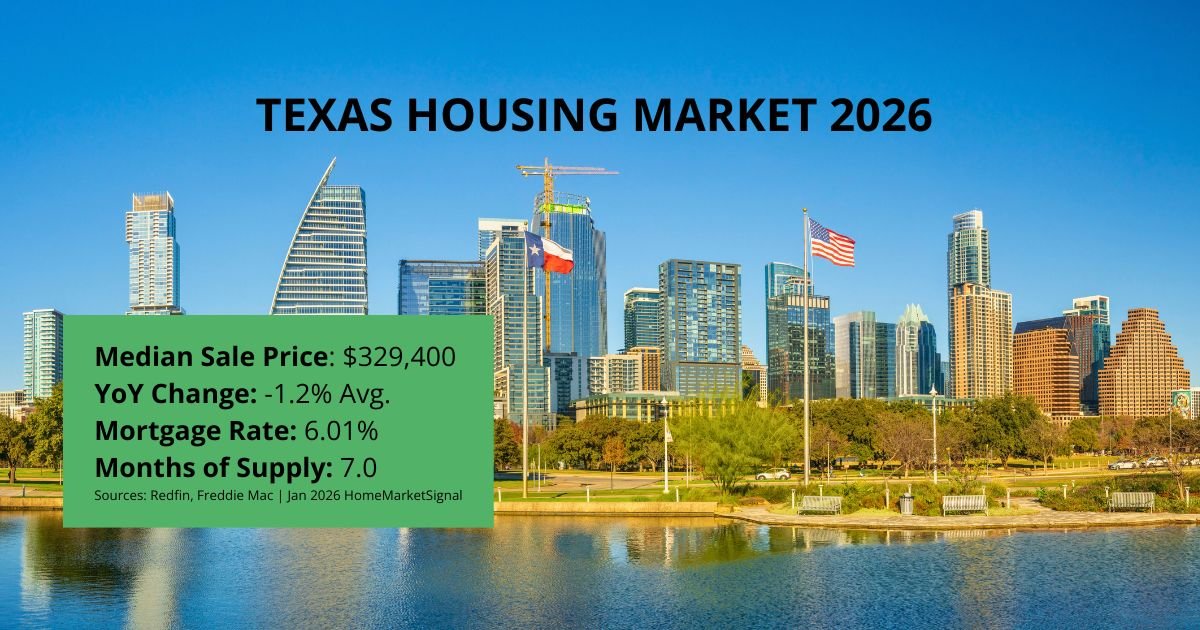
Unlike the fast and often unsustainable price surges we saw before, the Texas housing market in 2026 is expected to move at a more measured pace, with single-digit home value gains. This gradual, steady movement marks a real shift toward balance in the market, and the noticeable rise in listings is already opening doors for eager buyers throughout the state’s biggest metro regions.
By January 2026, Houston’s real estate scene caught the attention of buyers with a solid swell in active listings: a 16.2% increase compared with the same month a year earlier, hitting an impressive 10,165 homes. That surge in available homes points to a healthier, more even market, one that gives shoppers more variety and more room to negotiate on properties that fit their goals.
Current Inventory Surge Creates Buyer Opportunities
The standout story of the Texas housing market this year has been the surge in available properties across major cities. Houston continues to lead that movement with a 16.2% rise in active listings from the year before, reaching 10,165 homes in January 2026, based on numbers from Realtor.com.
Dallas, meanwhile, has roughly five months of housing supply throughout 2026. Experts describe this setup as a balanced condition, a huge change from the seller-heavy markets we saw in years past when buyers faced slim pickings and intense bidding wars.
In Austin, the shift is even more intense: 13,261 homes were actively listed by February 17, 2026, giving the area about 4.71 months of inventory. What’s catching attention is that nearly half, or 48.9%, of Austin listings have reduced their asking price, clearly strengthening the bargaining position for buyers in what has long been a highly competitive market.
Price Trends and Modest Appreciation Forecasts
The era of seller-only dominance is behind us. In 2026, Texas markets are finding much better balance between both sides, and home price growth has cooled considerably compared with the fast-paced spikes we saw before.
In Houston, for instance, the median home price slid 3.1% to $319,900 in January 2026, a shift reflecting both more available homes and steadier market health. Still, specialists from HAR.com forecast small, single-digit growth for prices through the rest of 2026, meaning the adjustment looks like stabilization rather than a real downturn.
Forecasts for the Dallas metro suggest similar moderation. Experts expect roughly 2% to 4% appreciation during 2026. Homes in the mid-400s median range are steady, while higher-end listings in the 600-900k span, particularly in Frisco and Plano, now lean more toward buyer advantage.
Sales activity across DFW is also on the rise, up about 14%, alongside a mild 1-2% price gain. This shows the market’s healthy movement without runaway escalation, a pattern that repeats through other major Texas metros as 2026 progresses.
Mortgage Rate Outlook and Affordability Improvements
Mortgage rates are expected to keep edging lower across 2026, possibly resting in the mid-5% zone by the last quarter in the Dallas area. Some projections even hint that rates could dip into the low 5% range by year’s end, offering a welcome boost to affordability for both first-time and upgrading buyers.
This steadiness in rates is already encouraging more first-time buyers to step into the market. With home prices smoothing out and borrowing costs slowing down, people who were previously priced out finally have an opening to get into homeownership.
Experts do caution against hanging back for rates to hit exactly 6%, since by then demand could reignite and drive prices right up again. For many, now looks like the smart window to move before the competition ramps back up.
New Construction Role and Builder Incentives
Ongoing new construction continues to anchor housing supply across Texas. Builders are staying competitive in this adjusted market by offering appealing incentives; some in Houston even provide rate buydowns to make fresh builds stand toe-to-toe with existing homes.
For buyers, the broader variety of new properties adds a welcome layer of choice and bargaining room. Builders are tweaking terms and pricing methods to meet these steady and balanced conditions halfway, keeping buyers engaged with fairer deals.
This steady flow of construction helps keep supply levels stable statewide and prevents the extreme shortages that once pushed prices out of reach. These steady, manageable expansions contribute to a healthier, more consistent housing cycle rather than speculative bursts.
Regional Differences Across Houston, Dallas, and Austin
Houston stands ahead as 2026’s number one real estate market, benefiting from its broad economic roots in energy, healthcare, and tech. That range of industries maintains demand stability and supports smoother, more predictable appreciation instead of sharp market swings.
Dallas remains a model of equilibrium with its five months of supply, offering a fair playing field for buyers and sellers alike. The region’s fundamentals, such as solid sales growth and measured price gains, mark it as a reliable pick for sustained investment.
Over in Austin, conditions lean even more toward buyers, with 4.71 months of inventory and close to half the listings cutting prices. The median value at $435,000 in mid-February 2026 spotlights a shift that’s finally opening the door to those who were sidelined during the boom era.
Market Stabilizers and Economic Fundamentals
Texas’s wide-ranging economy plays a critical role in keeping the housing scene steady moving into 2026. Anchored by strengths in technology, energy, and healthcare, the steady job creation keeps housing demand consistent, without fueling risky speculation.
These careful, balanced patterns in 2026 speak to genuine market strength rather than worrying corrections. The slow pacing signals maturity, showing that homes are appreciating at a rate that aligns with long-term stability.
The mix of industries anchoring Texas metros adds another safety net; when one sector slows, others often fill the gap, helping keep local housing economies balanced and resilient.
Risks and Market Challenges
Even with the generally positive patterns, a few challenges remain. DFW, for one, saw 122 REO foreclosures in January 2026, ranking it among the top five metro areas in the country for such activity. That number suggests a bit of distressed inventory sneaking back into circulation.
The shift toward a balanced market naturally induces a period of adjustment. Some sellers must now realign price expectations; homes that were listed too optimistically during peak times may take longer to move or will need price changes before drawing offers.
Fluctuating interest rates linger as a wildcard too, since surprise increases could cool enthusiasm and slow this calm recovery. Still, most forecasts continue to lean toward rate steadiness during 2026, easing those concerns slightly.
Strategic Advice for Buyers and Sellers
For anyone buying, this moment presents a rare window of advantage. Surging listings across Texas equal more selection and better leverage, especially in Austin where almost half of sellers have trimmed prices to attract fresh interest.
It makes sense for buyers to act confidently when rates are attractive; waiting for slight improvements might backfire when competition returns and pricing rises again. Today’s combined environment of broad inventory and rate stability sets up nearly ideal buying circumstances.
Sellers, on the other hand, are best served by realistic pricing aligned with current data, not the highs of a few years back. Properly priced homes capture buyer attention faster; overly ambitious ones will just sit longer and miss opportunities.
Across the board, it pays for both sides to rely on knowledgeable local agents. Those professionals understand each metro’s quirks and changing signals, helping clients approach their next steps with clarity and confidence.
Looking Ahead: Sustainable Growth Patterns
As 2026 unfolds, the Texas housing market appears to be settling into a sustainable rhythm after its growth-heavy years. That balance benefits buyers and sellers alike, while also nurturing the kind of stability crucial for long-term success.
Core fundamentals point toward continued modest appreciation through the year, anchored by sturdy job markets and steady population inflows. Together, the combination of easier affordability and more available listings sets the table for healthy transactions statewide.
All of this shapes an encouraging backdrop for buyers to reach for their ideal home and for sellers to gain gradual value growth. In short, the new balance discovered in 2026 offers ongoing steadiness well suited to sustained real estate success across Texas.
So, it looks like 2026 stands as a genuinely balanced year for property dealings statewide. The eased pace and measured growth tell the story of a market that’s finally caught its breath and is ready to grow sensibly again, giving investors and homeowners room to build lasting value.